
Progressive Smoking Reduction: How to Quit Gradually (And Why It Works)

Quitting smoking doesn't have to mean going from 20 cigarettes to zero overnight. For many people, progressive smoking reduction - gradually cutting down over time - offers a more realistic and sustainable path to becoming smoke-free.
If you've tried cold turkey and struggled, or if the thought of quitting abruptly feels overwhelming, you're not alone. Gradual reduction respects where you are while helping you move forward at a pace that works for your life.
The Challenge with All-or-Nothing Quitting
Cold turkey works for some people. But here's what research shows: only 3-5% of people who try to quit abruptly remain smoke-free after a year. For many, the sudden withdrawal is so intense that it leads to relapse within days or weeks.
The problem isn't lack of willpower - it's that our brains and bodies need time to adjust to major changes in nicotine intake.
Why Progressive Reduction Works: The Science
Gradual smoking reduction isn't just easier psychologically - it's backed by solid research.

Neurological Adaptation
When you smoke regularly, your brain develops extra nicotine receptors. Quitting suddenly leaves all these receptors screaming for nicotine, causing intense cravings and withdrawal. Progressive reduction allows your brain to gradually down-regulate these receptors, making the transition smoother.
Reduced Withdrawal Intensity
Studies show that gradually reducing nicotine intake leads to:
- Milder withdrawal symptoms - less irritability, anxiety, and physical discomfort
- More manageable cravings - easier to resist when they're not overwhelming
- Better sleep quality - less disruption during the quit process
- Lower stress levels - important since stress is a major relapse trigger
Comparable Long-Term Success
Here's the key finding: Research indicates that gradual reduction can be just as effective as abrupt cessation for long-term quit success. A comprehensive review found similar quit rates at 6 months and beyond between gradual and abrupt methods - but gradual reduction often had better adherence and fewer early dropouts.
Behavioral Learning
Gradual reduction gives you time to:
- Identify your smoking triggers
- Practice alternative coping strategies
- Build new habits to replace smoking
- Gain confidence through small wins
- Learn what works for YOUR specific situation
This experiential learning makes you better prepared when you finally reach zero cigarettes.
How to Implement Progressive Smoking Reduction
Ready to try gradual reduction? Here's the proven step-by-step approach.

Step 1: Establish Your Baseline (Week 0)
Track every cigarette for 7 days. Don't try to cut down yet - just gather honest data.
For each cigarette, note:
- Time of day - When did you smoke?
- Location - Where were you?
- Activity - What were you doing?
- Emotion - How did you feel?
- Urge intensity - Rate 1-10 how strong the craving was
This tracking reveals your patterns. You might discover you smoke more when stressed, after meals, or at certain times of day. This information becomes crucial for your reduction plan.
Step 2: Set Your Reduction Rate
Choose a reduction pace that feels challenging but achievable:
Conservative approach: Reduce by 10% per week
- Example: 20 cigarettes → 18 → 16 → 15 → 13 → 12, etc.
- Timeline: 18-20 weeks to reach zero
- Best for: Heavy smokers (20+ daily), high stress situations
Moderate approach: Reduce by 15-20% per week
- Example: 20 cigarettes → 16 → 13 → 10 → 8 → 6 → 5 → 3 → 0
- Timeline: 8-12 weeks to reach zero
- Best for: Most people, moderate smokers (10-20 daily)
Aggressive approach: Reduce by 25% per week
- Example: 20 cigarettes → 15 → 11 → 8 → 6 → 4 → 3 → 0
- Timeline: 6-8 weeks to reach zero
- Best for: Light smokers, those with flexible schedules
Important: You can adjust your pace. Life gets stressful? Slow down for a week. Feeling confident? Speed up. The goal is progress, not perfection.
Step 3: Identify Your "Easiest" Cigarettes
Review your baseline tracking. Which cigarettes would be easiest to eliminate?
Look for:
- Low-urge cigarettes - ones you rated below 5 in intensity
- Automatic cigarettes - ones you smoke out of habit, not strong craving
- Situational cigarettes - ones tied to easily avoidable situations
- Social cigarettes - ones you'd skip if alone
Strategy: Eliminate these easier cigarettes first. Save your "most important" cigarettes (morning, after work, with coffee) for later weeks. This builds confidence and momentum.
Step 4: Create Daily Limits and Spacing Rules
Once you know your target for the week, create structure:
Daily limits: If you're reducing to 16 cigarettes this week, that's your absolute maximum. Even if you want more, you stop at 16.
Spacing rules: Space cigarettes evenly throughout your waking hours.
- 16 cigarettes over 16 waking hours = one per hour maximum
- Use timers or apps to track when you can have your next cigarette
- This prevents chain smoking and builds impulse control
Delay tactics: When cravings hit before your "allowed" time:
- Wait 10 minutes - cravings peak and pass in 5-10 minutes
- Drink water or chew gum
- Change your environment
- Call someone or use an app for support
Step 5: Replace the Ritual
Smoking isn't just about nicotine - it's a ritual. As you reduce, replace the smoking ritual with alternatives:
For stress relief:
- 5-minute walk
- Deep breathing exercises
- Squeeze a stress ball
- Stretch routine
For breaks at work:
- Walk outside without smoking
- Chat with non-smoking colleagues
- Listen to music or podcast
- Snack on carrots or sunflower seeds
For hand-to-mouth habit:
- Chew sugarless gum
- Drink water or herbal tea
- Eat crunchy vegetables
- Use a toothpick or straw
For after meals:
- Brush teeth immediately
- Take a short walk
- Have fruit or mints
- Do dishes right away
Step 6: Track Progress and Adjust
Continue tracking every cigarette as you reduce. This serves multiple purposes:
- Accountability - harder to exceed your limit when you're conscious of it
- Pattern recognition - shows which situations remain difficult
- Motivation - seeing progress builds momentum
- Data for adjustment - if a week feels impossible, slow down
Celebrate milestones: first week completed, dropping below 10 cigarettes, first single-digit day, first cigarette-free day.
Combining Progressive Reduction with Other Methods
Gradual reduction works even better when combined with support:
Progressive Reduction + Nicotine Replacement Therapy (NRT)
Using NRT while gradually reducing can make the process easier:
- Nicotine patches provide baseline nicotine, reducing cravings
- Nicotine gum or lozenges help manage breakthrough urges
- You reduce cigarettes while NRT handles withdrawal
- Eventually taper off NRT after eliminating cigarettes
Studies show this combination has higher success rates than either method alone.
Progressive Reduction + Behavioral Support
Working with a counselor, support group, or quitline while reducing helps you:
- Stay motivated during difficult weeks
- Problem-solve challenging triggers
- Process emotions around quitting
- Learn from others' experiences
- Have accountability
Progressive Reduction + Digital Tools
Modern technology offers powerful support for gradual reduction through apps that provide:
- Automatic tracking and reminders
- Visual progress charts and statistics
- Countdown timers for spacing cigarettes
- Trigger identification and insights
- Daily motivation and tips
How QSmoking Supports Progressive Reduction
QSmoking was designed specifically for the gradual reduction method. Here's how it helps:
Smart Tracking Made Effortless
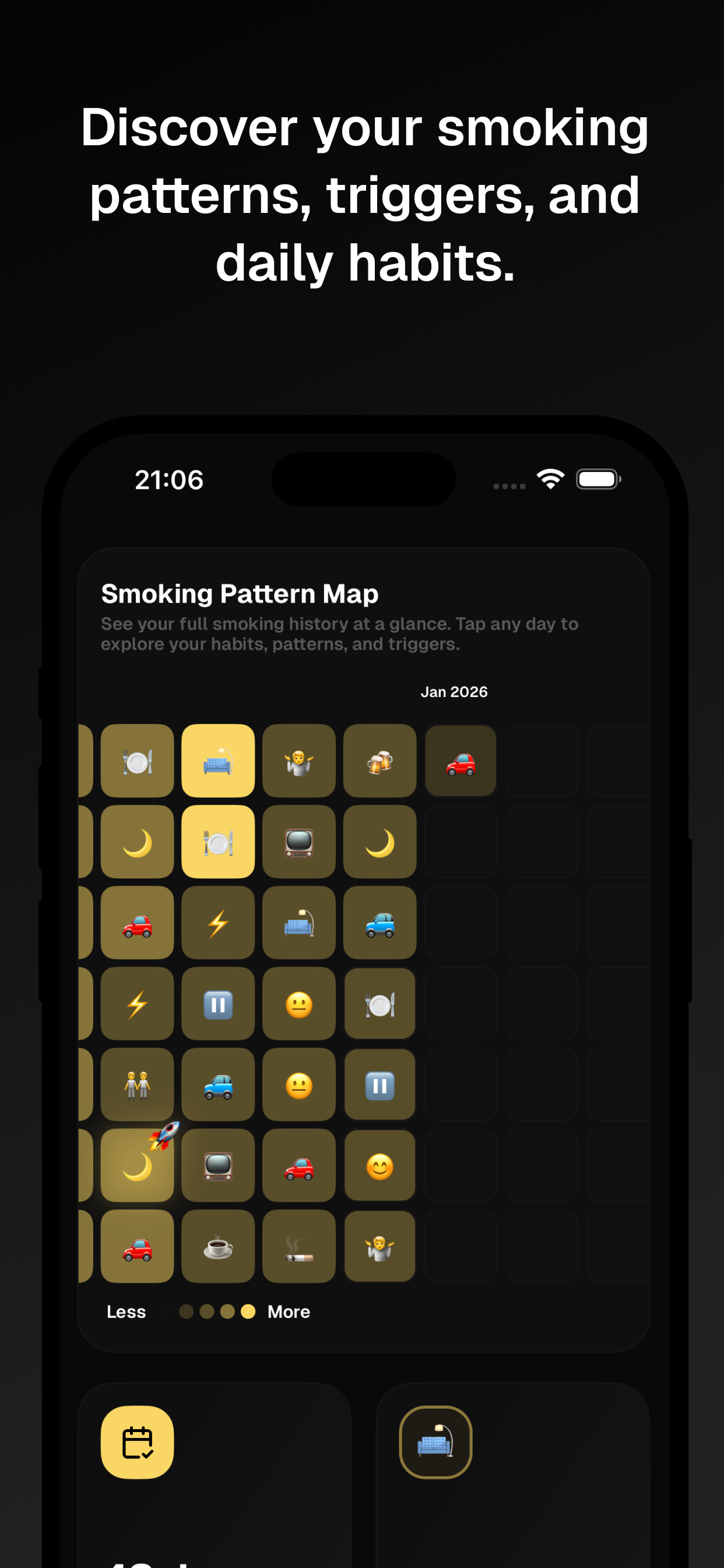
One-tap logging: Record each cigarette in seconds, noting time, location, and trigger Automatic patterns: The app identifies your smoking patterns and peak times Visual heat map: See exactly when and where you smoke most
This awareness is the foundation of successful reduction.
Personalized Quit Plans
Customizable reduction pace: Choose aggressive, moderate, or gentle reduction Flexible adjustments: Life gets stressful? Adjust your plan with a few taps Milestone tracking: Celebrate when you hit reduction targets
Your plan adapts to you, not the other way around.
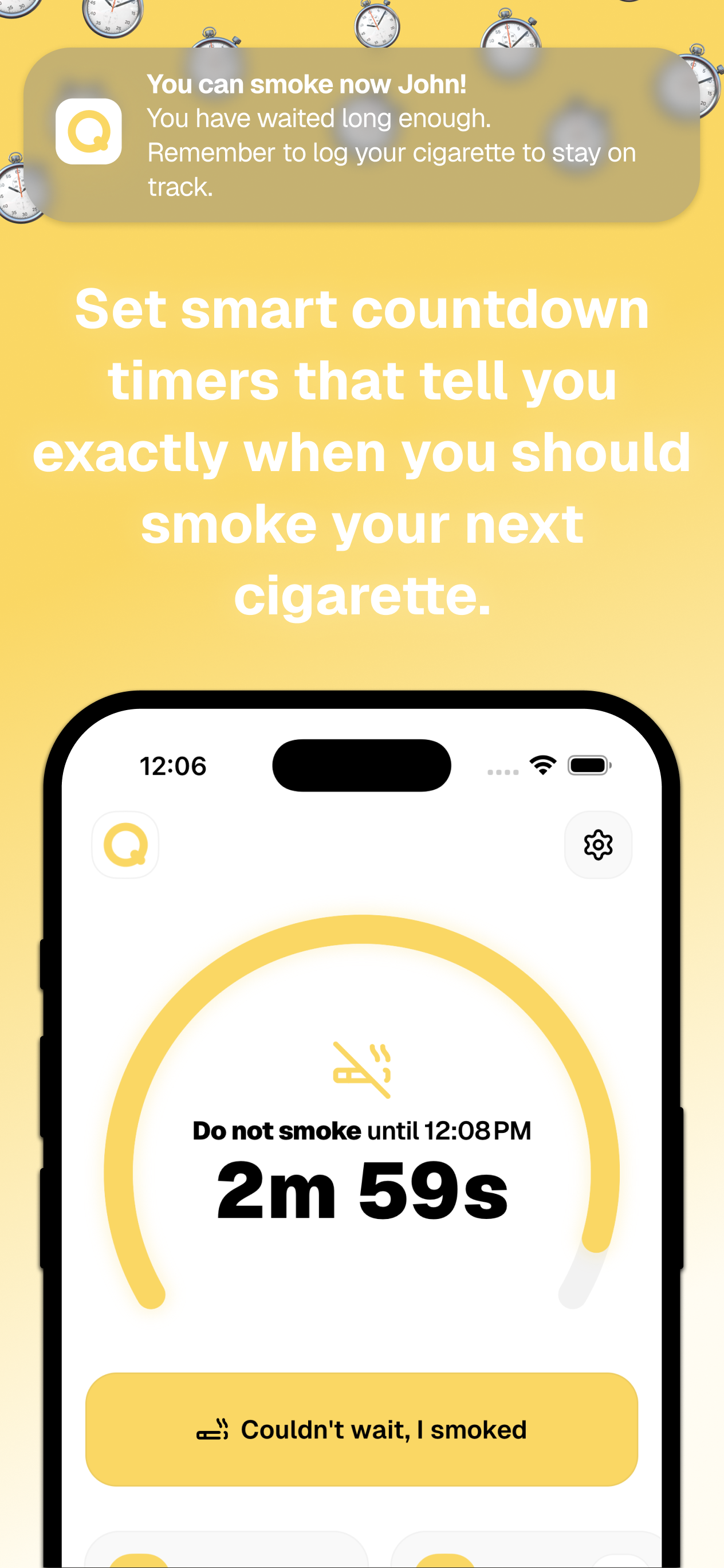
Smart Countdown Timer
Real-time guidance: Tells you exactly when you can smoke your next cigarette Removes mental negotiation: No more "should I smoke now or wait?" Builds spacing habits: Gradually increases intervals between cigarettes Visual progress: Watch the countdown and feel in control
This feature is game-changing for people who struggle with impulse control.
Daily Limits That Actually Work
Set your target: Tell QSmoking how many cigarettes for today Real-time tracking: Always know how many you have left Gentle accountability: Notifications help you stick to your limit Success reinforcement: Visual confirmation when you meet your goal
Limits work when they're clear, tracked, and celebrated.
Deep Trigger Insights
Tag every cigarette: Stress, boredom, coffee, after meals, social, etc. Identify patterns: Discover which triggers are strongest for you Plan alternatives: Develop specific strategies for your top triggers Track improvement: See trigger frequency decrease over time
Understanding your "why" is crucial for long-term success.

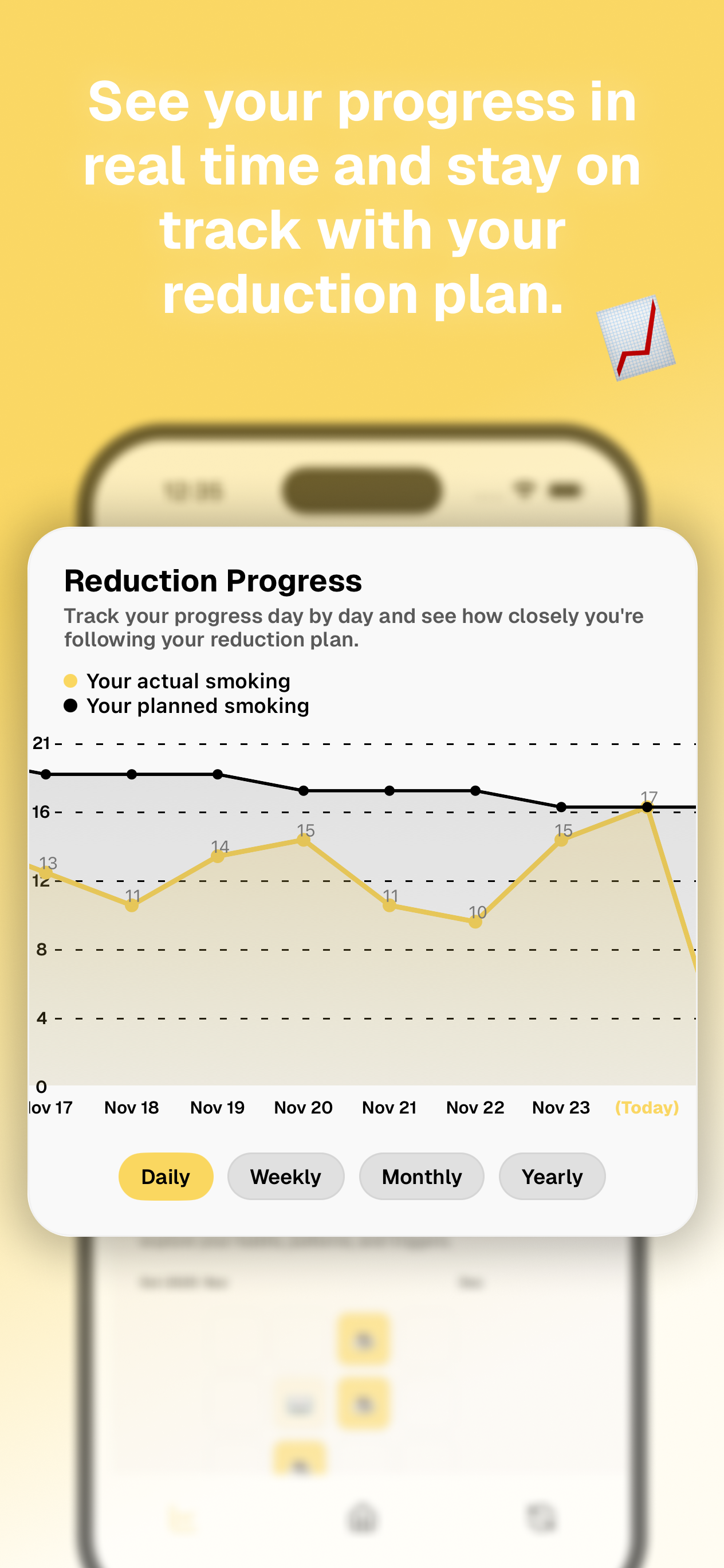
Powerful Progress Analytics
See your success in real numbers:
- Cigarettes avoided compared to your baseline
- Nicotine reduction percentage over time
- Money saved from smoking less
- Weekly and monthly trends to spot patterns
- Streak tracking for motivation
Watching these numbers improve becomes incredibly motivating.
Smart Reminders
Time-based notifications: When your next cigarette is allowed Missed logging reminders: Helps maintain accurate tracking Motivational messages: Encouragement when you need it Custom scheduling: Reminders that fit your life
Stay on track without obsessing over the app.
Common Challenges with Gradual Reduction (And Solutions)
Challenge 1: "I Exceeded My Limit Today"
Solution: Don't spiral. One over-limit day doesn't erase your progress. Tomorrow is a new day. Review what triggered the excess and plan differently. Most importantly, keep going - don't use one tough day as an excuse to give up entirely.
Challenge 2: "Some Days Feel Impossible"
Solution: You might be reducing too fast. Slow your pace for a week or two. Add NRT support. Increase other support (counseling, app, friends). There's no prize for fastest reduction - sustainable progress matters most.
Challenge 3: "I'm Stuck at 5-7 Cigarettes Per Day"
Solution: This is common - these last few cigarettes are often your strongest habits. Take extra time here. Spend 2-3 weeks at this level while working intensively on trigger strategies and replacement behaviors. Consider adding NRT to help with this final push.
Challenge 4: "I Keep Smoking the Same Triggers"
Solution: Time to get specific about that trigger. If it's always "stress at work," you need concrete stress management alternatives. If it's "after dinner," you need a compelling after-dinner ritual. Work with a counselor or use QSmoking's trigger insights to develop targeted strategies.
Learn more about identifying and managing your specific triggers →
Challenge 5: "I'm Afraid to Reach Zero"
Solution: This fear is real and common. Zero cigarettes feels final and scary. Remember: reaching zero is a milestone, not a cliff. You've been practicing for weeks. You've built new habits. You've proven you can manage cravings. You're more prepared than you think. And if you struggle, you have tools and support.
From Gradual Reduction to Smoke-Free
As you approach zero cigarettes, prepare for the transition:
Your final week (2-3 cigarettes daily):
- Intensify support (daily check-ins with friend, counselor, or app)
- Have your craving management tools ready
- Clear your environment of all smoking materials
- Plan activities for your first smoke-free days
- Consider starting NRT if you haven't already
Your quit day (first day at zero):
- Expect it to feel strange, not necessarily terrible
- You've been practicing for weeks - use those skills
- Stay busy and avoid biggest triggers initially
- Celebrate making it through the day
- Remember: you're not starting from scratch
Get detailed guidance for your first week smoke-free →
Weeks after quitting:
- Some days will be easier than others - this is normal
- Use the same strategies that worked during reduction
- Stay connected to support systems
- If you slip and smoke one, don't catastrophize - analyze and continue
- Your brain continues adapting for months
Is Progressive Reduction Right for You?
Gradual reduction works particularly well if you:
- Find abrupt change overwhelming
- Have tried cold turkey unsuccessfully
- Smoke more than 10 cigarettes daily
- Have high-stress situations you can't avoid
- Want to understand your smoking patterns first
- Prefer structured, measured progress
- Respond well to data and tracking
- Like having control over your pace
It may not be ideal if you:
- Prefer all-or-nothing approaches
- Find prolonged quitting process frustrating
- Have strong willpower for immediate change
- Smoke very few cigarettes (under 5 daily)
Remember: there's no "better" method - only what works for you. And you can always adjust if your first choice doesn't fit.
Explore all evidence-based quitting methods →
Your Progressive Path Forward
Progressive smoking reduction offers a realistic, science-backed approach to quitting that respects your current situation while moving you toward your goal. By gradually reducing, tracking your patterns, and building new habits, you're setting yourself up for long-term success.
Whether you use an app like QSmoking, work with a counselor, or create your own tracking system, the principles remain the same: gradual reduction, consistent tracking, trigger awareness, and sustainable habit change.
Start Today
You don't need to quit today to start your quit journey today. Begin by:
- Tracking your baseline for one week
- Choosing your reduction pace based on your smoking level
- Setting your first week's target (10-20% reduction)
- Preparing alternatives for your easiest cigarettes to eliminate
Every cigarette you don't smoke is progress. Every week you reduce is building toward your smoke-free future.
Download QSmoking and start tracking your first day. See your patterns. Set your first limit. Watch your progress. And most importantly - do it at your own pace.
Thank you for being here. You're not just cutting down cigarettes - you're building a healthier future, one intentional choice at a time.